The North Atlantic Alliance. Distorted Views of It and the True Nature of NATO
Part 3
3. NATO’s Operational and Combat Training Measures
As have already been noted, since 2014, the North Atlantic Alliance has returned to the system of operational and combat training characteristic of the former Cold War. Its main aim and content is to prepare NATO’s Armed Forces for a possible armed conflict and war with Russia, including with the use of nuclear weapons.
Today, the main event of NATO’s ACO (Strategic Command for Operations) of Allied Armed Forces is the “Defender”- type strategic exercise. It is accompanied by a set of other exercises that are united by a common operational background. In general, they cover the entire European theater of operations and adjacent waters.
 The whole range of issues related to the NATO Allied Armed Forces’ participation in an armed conflict or war with Russia is being practiced. This mainly concerns the following tasks:
- redeployment of NATO’s troops to the front lines and their reinforcement by redeploying certain US units and forces from the continental United States;
- concentration of NATO’s (immediate) Response Forces in threatened areas and their involvement in stabilizing the situation in the areas of conflicts provoked by Russia, as well as counteracting its advanced forces;
- use of forces and means of NATO’s Allied Rapid Reaction Corps (ARRC) for this purpose;
- creation of the main groups of the NATO Allied Forces in the areas of the Russian Armed Forces’ possible invasion;
- conducting operational-tactical and strategic defense and counteroffensive operations;
- use of nuclear weapons in response to nuclear strikes by Russia;
- ensuring the logistics of troops and fleets.
Besides, the exercises have political goals. These include deterring Moscow’s aggressive actions by demonstrating to it the strength and reaffirming the unity of the Alliance.
An example of this was the set of exercises of the NATO Allied Forces and the armed forces of NATO member states that took place against the background of the “West-2025” strategic exercise of Russia and Belarus. They included: in Poland – “Iron Defender – 2025”; in Lithuania – “Perkūno Griausmas” (“Perun’s Thunder”); in Latvia – “Namejs – 2025”; in Finland – “Karelian Fortress”, “Southern Griffin – 2025”, “Kinetic Stronghold – 2025”. In total, they involved no less personnel and military equipment than were involved in the “West-2025” strategic exercise.
4. Ukraine’s Role and Place in the European and Euro-Atlantic Security System
Ukraine’s place in the new system of European and Euro-Atlantic security is quite significant, as it has the most powerful Armed Forces in Europe with experience and motivation to fight against Russia. In view of this, the United States and Europe consider Ukraine to be one of the main forces in deterring Russia’s military expansion to the west.
 Currently, within the European theater of operations, Ukraine is already acting as a frontline on NATO’s southern flank in Central and Eastern Europe, Southeastern Europe, and the Black Sea region. In this way, Ukraine protects the countries of those regions from possible Russia’s attacks and provides them with air and missile defense. With its experience in countering Russian UAVs, missiles and aircraft, Ukraine also helps NATO in strengthening its air defense.
In turn, Poland, Romania, and, in fact, Hungary and Slovakia, are Ukraine’s operational and strategic rear. In particular, Poland is the main hub through which weapons are supplied to Ukraine; Romania provides Ukraine with a safe route to maritime communications; gas and electricity transit from Europe to Ukraine is carried out through Hungary and Slovakia.
The issue of possible use of NATO forces and assets in Ukraine’s neighboring countries to destroy means of Russia’s air attack over Ukrainian territory is being considered. This will strengthen the air defense of both Ukraine and the Alliance.
Besides, as already noted, Ukraine has access to the European SAFE fund, which provides funds to meet its weapons needs. Weapons are manufactured by both EU member states’ defense companies and Ukraine’s defense industry, including on the territory of European states, as part of the so-called “Danish initiative”.
A number of other US, NATO and EU programs are also being implemented to help Ukraine strengthen its defense capabilities. This improves Ukraine’s ability to ensure the security of NATO and the EU on their southern flank.
In this context, the implementation of the initiative to deploy Western military contingents on the territory of Ukraine as a guarantee of its security would be tantamount to extending NATO’s forward presence to Ukraine. This would indeed become one of the most serious guarantees of Ukraine’s security, and would also contribute to the deepening of its European and Euro-Atlantic integration. Moreover, such a system is an integral part of the Euro-Atlantic security architecture.
Extended Conclusions
This state of affairs allows us to draw solid conclusions about the real situation in the Alliance, its policies and mechanisms of action, which are fundamentally different from what most Ukrainian and other experts and the media talk about.
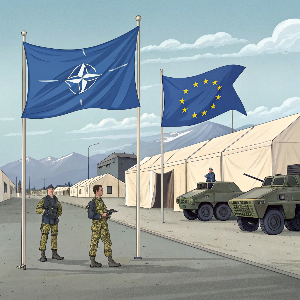 First, NATO’s leadership has a clear and balanced policy to protect transatlantic and European security. It is consistent with current realities and takes into account changes in the situation. This is evidenced by the adequacy of the assessment of threats to the Alliance and the identification of realistic ways to address them, which are being implemented in practice.
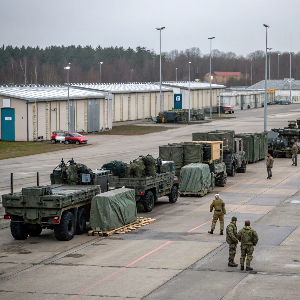 Secondly, despite the fact that the United States is concerned about containing China globally and in the Asia-Pacific region, it still has no plans to reduce the number of US troops in Europe, at least in the near future. Come the need, they may even be increased. At this, the United States is not taking any large-scale measures to increase its military presence in the Asia-Pacific Region. On the one hand, this confirms the USA’s commitment to its obligations to Europe, and on the other hand, it demonstrates that Washington wants to normalize relations with Beijing or at least avoid aggravation.
But then, even if the United States does decide to withdraw its troops from Europe, it will not be considered a catastrophe for the country. According to independent estimates, the US contribution to NATO is only 16 %. In particular, in peacetime, only two American divisions are stationed in Europe, while Poland’s Army alone has seven such divisions.
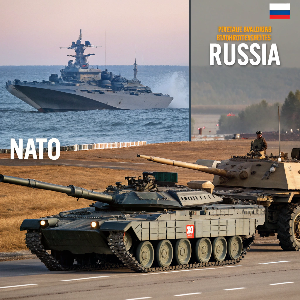 Thirdly, the North Atlantic Alliance is capable of protecting its members from Russia’s possible attack. NATO’s Armed Forces are not inferior to the Russian Armed Forces and will be able to repel Russian aggression. Even according to Russian estimates, the Alliance’s military potential is 4.5 times greater than Russia’s.
In particular, the first echelon of the Alliance outside of Ukraine includes Poland, the Baltic States, Finland, and partially Norway. Poland’s Armed Forces have seven mechanized divisions and several separate brigades. This is approximately equal to three combined arms armies of the Russian Armed Forces. Lithuania’s Armed Forces consist of a mechanized division and two separate brigades. The Lithuanian and Estonian Armed Forces have two brigades each. In general, they correspond to the army of the Armed Forces of the RF.
On the territory of Poland there is the 5th AC of the US Armed Forces. As already mentioned, it can be equated to one Russian army. In addition, the Allied Rapid Reaction Corps “Northeast”, as well as two brigades and two battalions of NATO’s advanced forces are deployed in Poland and the Baltic States. Together, they outnumber a combined arms army of the Russian Armed Forces. Finland’s Armed Forces are the size of a single Russian army. Finally, the groupings of the Armed Forces of Poland, the Baltic States and Finland, as well as the NATO Allied Forces on their territory, are approximately the size of the grouping of personnel of seven Russian armies. According to the classics of military science, Russia needs at least three times the strength, i.e. 21 armies, to win. It will not have this even after the war against Ukraine is over. This calculation is rather primitive and does not take into account many factors, including the number of troops in NATO’s second echelon, which is larger than in the first. But it is possible to estimate the order of magnitude.
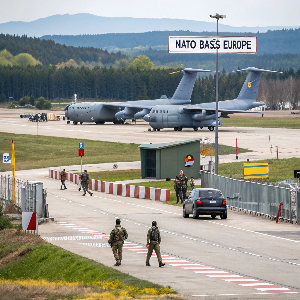 Fourthly, NATO will definitely provide assistance to Poland, the Baltic states and other new members of the Alliance in case of Russia’s attack on them. The advanced forces of the NATO Allied Armed Forces are already on their territory. They are ready to engage in combat if necessary. Even because they are located on the most threatening directions. It simply cannot be otherwise, because NATO units will not be able to withdraw or take a neutral position, it is unrealistic. Therefore, Article 5 of the North Atlantic Treaty on collective security will come into effect automatically.
This is confirmed by NATO’s reaction to the invasion of Polish airspace by Russian UAVs on the night of September 9-10, which for some reason was called inadequate and insufficient. In accordance with the principle of collective defense, all the necessary air defense capabilities of Poland’s NATO allies located on its territory were used to destroy them. There were no additional consultations or approvals. Their actions were indeed not effective enough, but that’s another matter entirely.
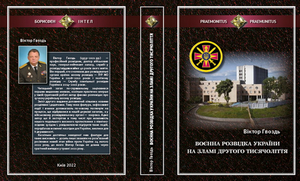 Fifthly, Russia would not be able to suddenly attack Europe, even if it chose one of the Baltic states. Preparing for an aggression would require considerable time and a set of complex measures that cannot be concealed. This would allow NATO to focus its efforts to repel a Russian invasion in a timely manner. In particular, according to former Chief of the Defence Intelligence of Ukraine, Lieutenant General V. Hvozd, in his book “Ukraine’s Military Intelligence at the Turn of the Second Millennium”, Russia’s preparations for the August 2008 attack on Georgia began a year earlier. The Defence Intelligence of Ukraine detected all signs of such actions and informed the Ukrainian leadership.
The same was true of Russia’s preparations for its first attack on Ukraine in February 2014. The Defence Intelligence of Ukraine reported on such intentions of Moscow in the autumn of 2013. However, the information was not taken into account, as the then Ukrainian leadership sold itself to Russia.
Signs of Moscow’s intentions to launch a full-scale war were also evident almost a year before its invasion of Ukraine. Russia began deploying strike forces around Ukraine in the spring of 2021. Within the framework of the “West-2021” exercise of the Armed Forces of Russia and Belarus, this process has been largely completed. This fact was publicly recognized by the Chief of the Defence Intelligence of Ukraine, Lieutenant General K. Budanov, and representatives of the United States and NATO in late 2021 and early 2022…
That is, NATO’s leadership would have enough time to respond to the threat of a Russian attack on the Alliance’s allies – from carrying out the necessary consultations to concentrating troops in dangerous areas. And possible attempts by Slovakia and Hungary to somehow prevent this would be harshly suppressed with the use of emergency measures of the pre-war state.
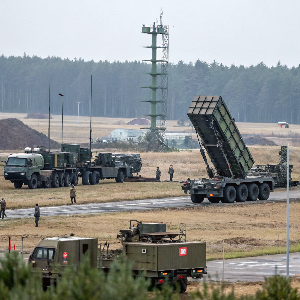 Sixthly, of course, NATO, like any other military and political structure, has many problems, including the adjustment of air defense. However, based on the experience of Russia’s war against Ukraine, they are being resolved with the help of our country. It is a complicated process, but everything is being done properly.
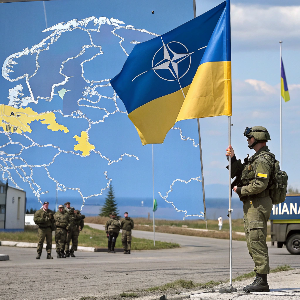 Seventhly, Ukraine occupies a real and worthy place in the system of European and Euro-Atlantic security, which is fundamentally important for it. For one, it is the front line of the Alliance on its southern flank, ensuring its defense against Russia’s encroachments. In turn, Ukraine’s entry into such a system is one of the most important factors guaranteeing its security.
Thus, the perceptions of the majority of Ukrainian society about NATO are currently untrue. They are distorted under the influence of Russian propaganda and our Ukrainian “experts” and media, who do not realize the essence of this issue. This plays into Moscow’s hands and undermines Ukrainians’ trust in the Alliance as the main guarantor of our country’s security, even in the absence of full membership.
Oleh Bereziuk, Heorhii Zahorskyi, Yurii Mykhailenko,
Institute for Global Politics
(Images generated by neural network)